Robotics
Robotics foundation models for physical AI—VLAs, dexterous manipulation, and learning from human and robot experience.
Overview
The world is facing unprecedented physical challenges, from critical labor shortages in manufacturing and logistics to the growing need for intuitive, versatile assistive robots in our homes. To meet these real-world demands, robotics must move beyond rigid, single-purpose machines confined to structured environments. Our group is building Robotics Foundation Models—such as Vision-Language-Action models (VLAs) and World-Action-Models (WAMs)—to serve as a universal brain for physical AI. By developing end-to-end methods that generalize across multiple similar robot embodiments, we are creating highly adaptable agents capable of instantly understanding and executing complex, real-time tasks specified by humans through natural language or video.
For these foundation models to truly master the physical world, they must replicate human-like adaptability and physical precision. Besides 2-finger grippers, we focus heavily on dexterous manipulation, advancing end-to-end models that govern complex, bi-manual 5-finger hands. To scale these physical capabilities rapidly, we translate vast amounts of various sources of data into robotics intelligence: e.g. teleoperation data, UMI (Universal Manipulation Interface) data, non-robotics 3D data, egocentric human videos. Powered by a robust pipeline of Imitation and Reinforcement Learning (IL and RL) for pre- and post-training, our research bridges the gap between digital reasoning and physical action, paving the way for general-purpose robotic assistants that can autonomously operate in both industry and everyday life.
Research topics
Representative research problems and themes in our Robotics agenda include:
- Robotics foundation models End-to-end robotics models such as Vision-Language-Action models (VLAs) and World-Action-Models (WAMs) that work on multiple robot embodiments.
- Dexterous manipulation End-to-end robotics models for bi-manual 5-finger hands.
- Learning manipulation from egocentric human videos Effectively utilizing human video data to boost robotics foundation model performance.
- Imitation and reinforcement learning for robotics manipulation Pre-training and post-training robotics policies via IL and/or RL.
Projects
5 projects
-
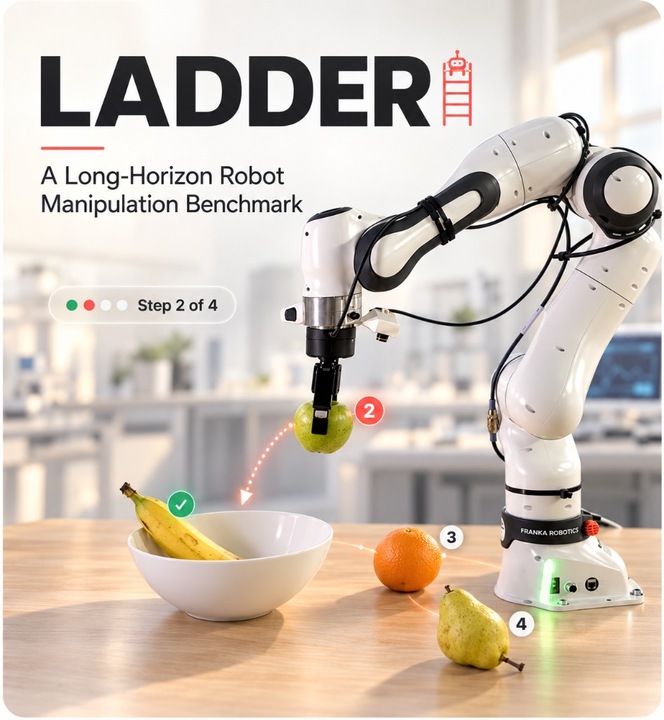 LADDER
A long-horizon robot manipulation benchmark — INSAIT × NVIDIA.
Visit project site
-
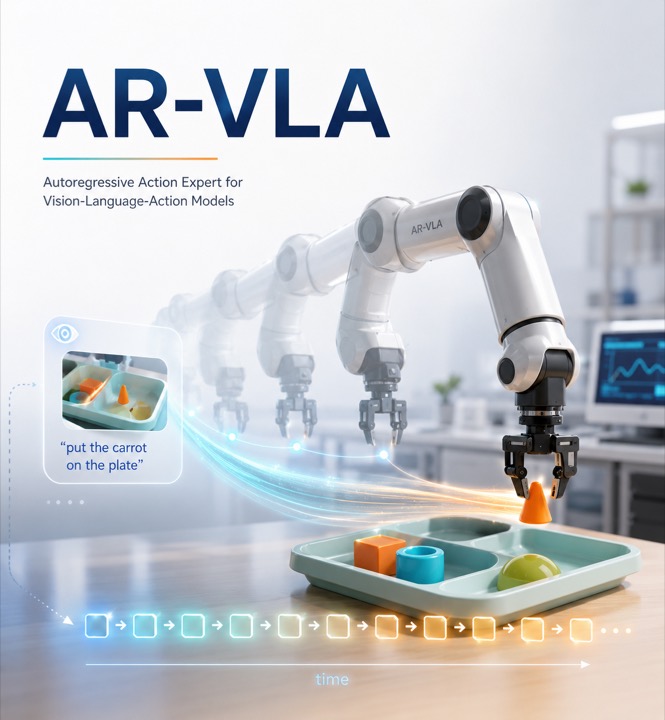 AR-VLA
Autoregressive action expert for vision–language–action models — RSS 2026.
Visit project site
-
 SPEAR-1
Scaling beyond robot demonstrations via 3D understanding — open weights from INSAIT Robotics.
Visit project site
-
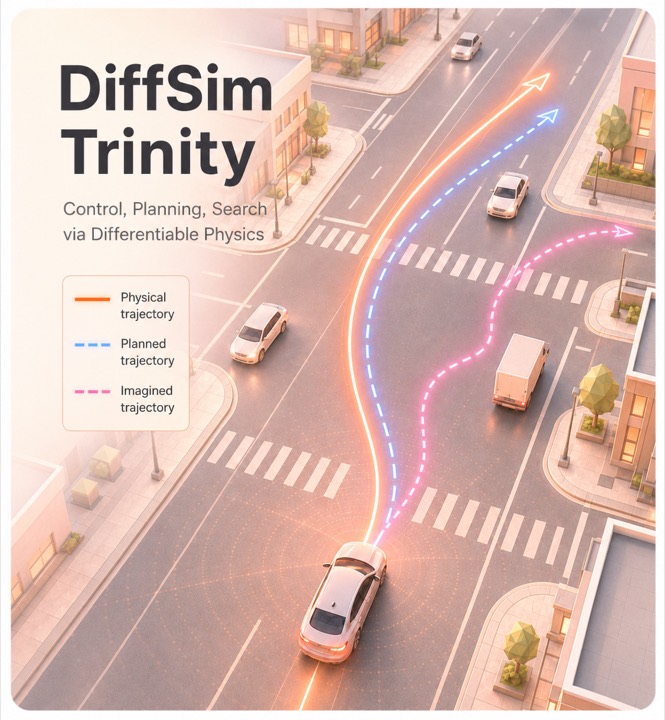 DiffSim Trinity
End-to-end autonomous driving via differentiable simulation.
Visit project site
-
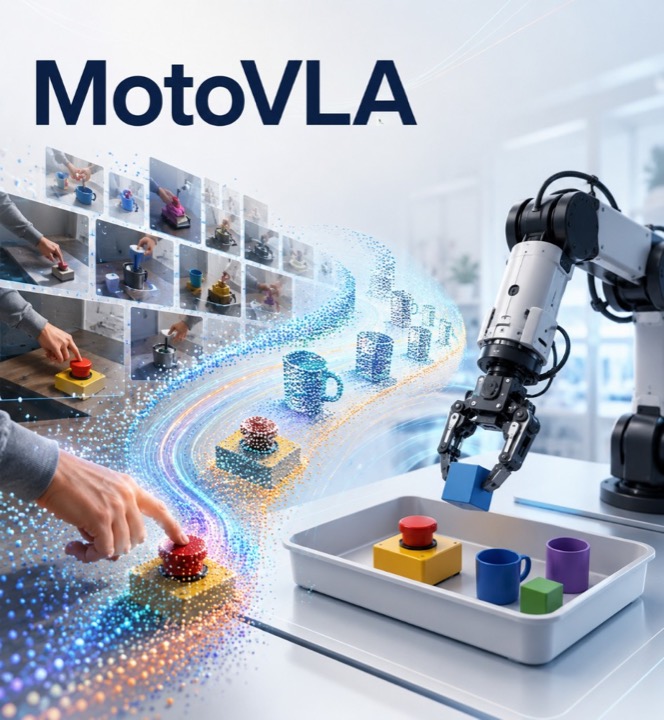 MotoVLA
Generalist robot manipulation beyond action-labeled data — CoRL 2025.
Visit project site






Publications
11 papers since 2024, including 2 at NeurIPS, 2 at CVPR and 2 at AAAI.
Highlights
All publications 11
2026
-
In: Conference on Neural Information Processing Systems (NeurIPS 2026)
-
SPEAR-1: Scaling Beyond Robot Demonstrations via 3D Understanding
In: IEEE/CVF Conference on Computer Vision and Pattern Recognition (CVPR 2026)
-
AR-VLA: Autoregressive Action Expert for Vision–Language–Action Models
In: Robotics: Science and Systems (RSS 2026)
-
Unlocking Efficient Vehicle Dynamics Modeling via Analytic World Models
In: AAAI Conference on Artificial Intelligence (AAAI 2026)
-
Autonomous Vehicle Path Planning by Searching With Differentiable Simulation
In: AAAI Conference on Artificial Intelligence (AAAI 2026)
2025
-
StateSpaceDiffuser: Bringing Long Context to Diffusion World Models
In: Conference on Neural Information Processing Systems (NeurIPS 2025)
-
Generalist Robot Manipulation beyond Action Labeled Data
In: Conference on Robot Learning (CoRL 2025)
-
Autonomous Vehicle Controllers From End-to-End Differentiable Simulation
In: IEEE/RSJ International Conference on Intelligent Robots and Systems (IROS 2025)
-
Think Small, Act Big: Primitive Prompt Learning for Lifelong Robot Manipulation
In: IEEE/CVF Conference on Computer Vision and Pattern Recognition (CVPR 2025)
-
ReVLA: Reverting Visual Domain Limitation of Robotic Foundation Models
In: International Conference on Robotics and Automation (ICRA 2025)
2024
-
Optimizing Long-Term Robot Tracking with Multi-Platform Sensor Fusion
In: Winter Conference on Applications of Computer Vision Workshop (WACVW 2024)
No papers match.
Partners

More topics
Vision Lab works on 6 topics. See them all on the Vision Lab page.
5 more topics
-
 Space AI
Reliable Understanding and Reasoning for Earth Observation
-
 3D Vision
Spatial intelligence for the physical world—reconstruction, understanding, generation, and embodied interaction.
-
 Egocentric Vision
Intelligence from the First-Person Perspective
-
 Visual Media
Processing, Editing, and Generating the Visual World
-
 Vision Agent
From Multimodal Foundation Models to Executable Visual Intelligence