Visual Media
Processing, Editing, and Generating the Visual World
Overview
Images and videos are no longer only records of the physical world. They are becoming the primary interface through which people communicate, create, simulate, learn, and interact with intelligent systems. At the same time, visual content is entering a new stage: it must be captured under imperfect real-world conditions, restored with high fidelity, edited with precise human control, generated with semantic and physical consistency, and eventually used as a medium for modeling dynamic worlds. This makes Visual Media a foundational research area that connects low-level vision, generative modeling, multimodal intelligence, creative tools, and real-world AI applications.
Our vision is to build the next generation of visual media technologies along three tightly connected pillars: Media Processing, Media Editing, and Media Generation. These are not separate topics, but different levels of the same problem. Media Processing asks how to recover, enhance, and understand imperfect visual signals. Media Editing asks how to modify existing visual content while preserving identity, structure, style, and user intent. Media Generation asks how to synthesize new visual worlds from language, reference images, layouts, videos, and multimodal conditions. Together, they form a complete pipeline from visual signal to controllable creation.
Media Processing
Media Processing remains a fundamental layer of Visual Media research. Real-world images and videos are often degraded by noise, blur, compression, low resolution, poor lighting, motion, weather, sensor limitations, and temporal instability. These degradations are not merely cosmetic problems. They affect downstream perception, creative reuse, scientific analysis, cultural preservation, autonomous systems, and human communication. High-quality restoration and enhancement therefore serve as the entry point for trustworthy visual intelligence. Our work in this direction studies how to combine classical signal fidelity, learned generative priors, temporal coherence, perceptual quality, and real-world robustness. The goal is to move beyond benchmark-specific restoration toward systems that are fast, faithful, controllable, and useful in real deployment scenarios, from mobile imaging and video streaming to archival restoration and professional production.


Drag the dividers to compare.
Media Editing
Media Editing is the bridge between understanding and creation. Editing is generation under strong constraints: the system must understand what the user wants to change, what must remain untouched, and how the edit should respect the original image or video. This requires precise control over geometry, identity, lighting, motion, texture, style, and temporal consistency. It also requires interfaces that allow humans to specify intent through language, examples, sketches, masks, timelines, or multimodal instructions. We view editing as a key step toward practical visual intelligence because most real creative workflows are not purely generative. They are iterative, conditional, and human-in-the-loop. A powerful visual media system should not only produce beautiful content from scratch, but also revise, repair, extend, localize, and refine existing content with professional-level control.
Media Generation
Media Generation represents a deeper transformation. Image and video generation are becoming a new form of media, not just a tool for producing assets. Video generation, in particular, is moving toward the ability to synthesize temporally coherent scenes, persistent characters, realistic motion, physical interactions, camera movements, and eventually interactive environments. This changes the role of video from a passive recording medium to an active generative medium. Future video models may support filmmaking, advertising, education, simulation, gaming, robotics, virtual production, digital twins, and scientific visualization. More importantly, they may serve as a basis for learning world models: systems that do not merely generate pixels, but learn how objects move, how agents act, how scenes evolve, and how physical and social dynamics unfold over time.
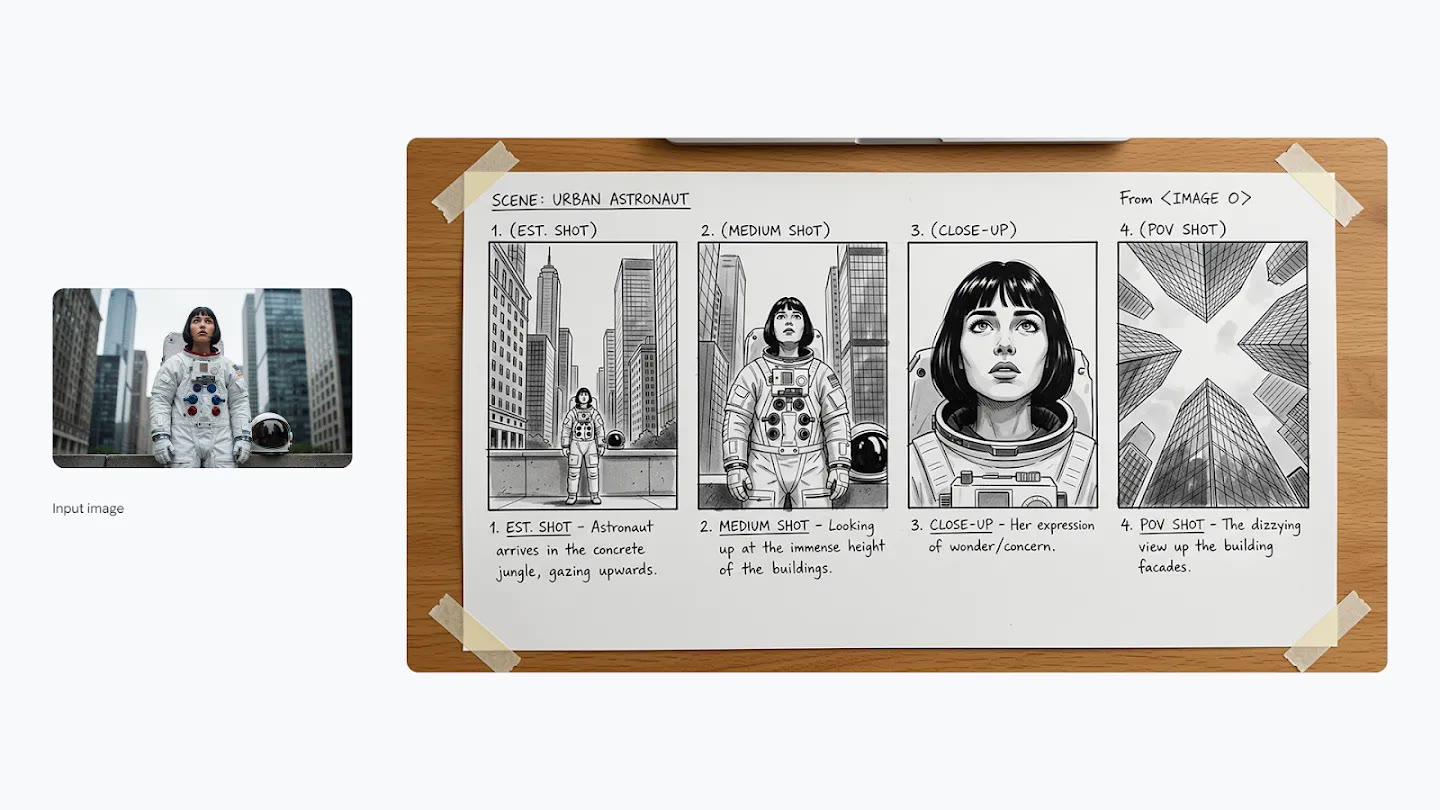
More concretely, our Visual Media agenda includes the following technical directions:
- Image and video processing Restoration, super-resolution, deblurring, denoising, low-light enhancement, and video quality improvement, with emphasis on input fidelity, perceptual quality, temporal stability, and real-world robustness.
- Image and video generation Diffusion, flow-based, transformer, and latent generative models for realistic, diverse, temporally coherent, and efficient visual synthesis.
- Controllable generation Synthesis conditioned on masks, sketches, depth, pose, layouts, camera paths, motion trajectories, reference images, identity, and style, toward precise and composable creative workflows.
- Multimodal generation and editing Joint reasoning over language, images, video, audio, and user feedback, including language-guided editing, reference-based generation, and interactive refinement.
- Quality assessment and perceptual evaluation Image, video, and multimodal quality assessment for restoration, enhancement, generation, and editing, covering fidelity, realism, aesthetics, temporal consistency, semantic correctness, instruction alignment, and human preference modeling.
- Agentic media creation AI systems that decompose visual tasks, select tools, plan editing steps, verify results, and iteratively improve outputs as creative assistants.
- World models and generative simulation Models that capture object permanence, spatial structure, physical interaction, causal dynamics, camera motion, and long-horizon scene evolution.
- Diffusion theory and generative modeling foundations Theory and empirics of sampling, controllability, stability, failure modes, and the interplay between generative priors and input fidelity.
- Real-world deployment and creative applications Mobile imaging, content creation, virtual production, education, cultural heritage, robotics simulation, and interactive AI tools, with attention to speed, latency, evaluation, and pipeline integration.
Our long-term ambition is to develop visual media systems that are faithful to real-world signals, controllable by humans, coherent over time, grounded in physical and semantic structure, and creative enough to expand the boundary of visual communication. By connecting media processing, editing, generation, multimodal intelligence, diffusion theory, agentic creation, and world modeling, we aim to build a unified research program for the next generation of visual intelligence.
Projects
4 projects
-
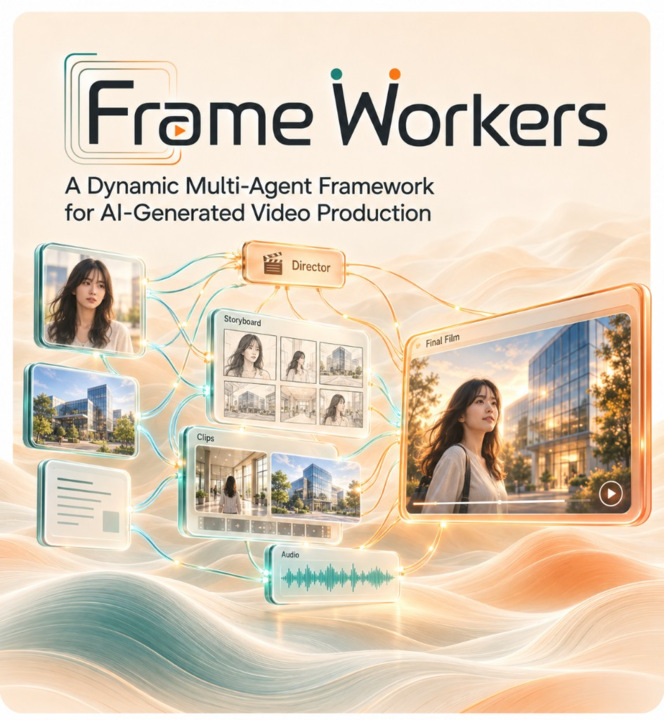 FrameWorkers
A Dynamic Multi-Agent Framework for AI-Generated Video Production
Visit project site
-
 OptiBrain
Autonomous Optical Design Agent
Visit project site
-
 VOID
Video object and interaction deletion — INSAIT × Netflix.
Visit project site
-
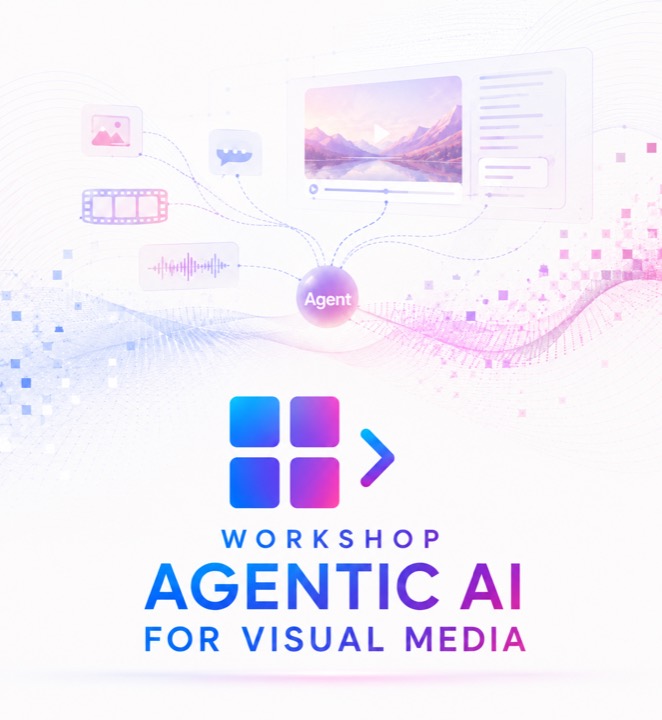 Agentic AI for Visual Media Workshop
1st Workshop on Agentic AI for Visual Media — Denver, June 2026.
Visit project site
People


Research fellows 2


PhD students 2

Publications
40 papers since 2023, including 10 at CVPR, 6 at NeurIPS and 5 at ECCV.
Highlights
-
ECCV 2026
VOID: Video Object and Interaction Deletion
All publications 40
2026
-
Position: Evaluation of Visual Processing Should Be Human-Centered, Not Metric-Centered
In: Conference on Neural Information Processing Systems (Position Track) (NeurIPS 2026)
-
PhysDNet: Physics-Driven Gradient Amplification for Real-Time Image Dehazing
In: Conference on Neural Information Processing Systems (NeurIPS 2026)
-
LongSCOP: Semantically Consistent Long Video Outpainting
In: Conference on Neural Information Processing Systems (NeurIPS 2026)
-
LensDesigner: A Self-Improving Agent for Optical Lens Design
In: Conference on Neural Information Processing Systems (NeurIPS 2026)
-
Harnessing Image Diffusion Prior for Photo-Realistic Video Restoration
In: Conference on Neural Information Processing Systems (NeurIPS 2026)
-
VOID: Video Object and Interaction Deletion
In: European Conference on Computer Vision (ECCV 2026)
-
Semantic-Aware, Physics-Informed, Geometry-Grounded Weather Synthesis
In: European Conference on Computer Vision (ECCV 2026)
-
EvDiff: High Quality Video with an Event Camera
In: European Conference on Computer Vision (ECCV 2026)
-
RealisMotion: Decomposed Human Motion Control and Video Generation in the World Space
In: International Conference on Machine Learning (ICML 2026)
-
Enhanced Latent-Space Adversarial Training for Super-Resolution
In: International Conference on Machine Learning (ICML 2026)
-
Universal Computational Aberration Correction: A Comprehensive Benchmark Analysis
In: IEEE/CVF Conference on Computer Vision and Pattern Recognition (CVPR 2026)
-
Rethinking Image Evaluation in Super-Resolution
In: IEEE/CVF Conference on Computer Vision and Pattern Recognition (CVPR 2026)
-
PhotoFramer: Multi-modal Image Composition Instruction
In: IEEE/CVF Conference on Computer Vision and Pattern Recognition (CVPR 2026)
-
Learning Latent Transmission and Glare Maps for Lens Veiling Glare Removal
In: IEEE/CVF Conference on Computer Vision and Pattern Recognition (CVPR 2026)
-
Intelligent Photo Retouching with Language Model-Based Artist Agents
In: IEEE/CVF Conference on Computer Vision and Pattern Recognition (CVPR 2026)
-
In: IEEE/CVF Conference on Computer Vision and Pattern Recognition (CVPR 2026)
-
In: International Conference on Learning Representations (ICLR 2026)
-
In: International Conference on Learning Representations (ICLR 2026)
-
Do generative video models understand physical principles?
In: Winter Conference on Applications of Computer Vision (WACV 2026)
-
Density-Aware Video Desnowing with Robust Alignment on a Large-Scale Dataset
In: IEEE Transactions on Multimedia (TMM 2026)
2025
-
When super-resolution meets camouflaged object detection: A comparison study
In: Computer Vision and Image Understanding (CVIU 2025)
-
Test-Time Training for Hyperspectral Image Super-Resolution
In: IEEE Transactions on Pattern Analysis and Machine Intelligence (TPAMI 2025)
-
Spatial-Temporal Graph Mamba for Music-Guided Dance Video Synthesis
In: IEEE Transactions on Pattern Analysis and Machine Intelligence (TPAMI 2025)
-
Harnessing Diffusion-Yielded Score Priors for Image Restoration
In: ACM SIGGRAPH Conference and Exhibition on Computer Graphics and Interactive Techniques in Asia (SIGGRAPH Asia 2025)
-
Enhanced Multi-Scale Cross-Attention for Person Image Generation
In: IEEE Transactions on Pattern Analysis and Machine Intelligence (TPAMI 2025)
-
Low-Light Image Enhancement using Event-Based Illumination Estimation
In: International Conference on Computer Vision (ICCV 2025)
-
The Tenth NTIRE 2025 Image Denoising Challenge Report
In: IEEE/CVF Conference on Computer Vision and Pattern Recognition Workshop (CVPRW 2025)
-
Complexity Experts are Task-Discriminative Learners for Any Image Restoration
In: IEEE/CVF Conference on Computer Vision and Pattern Recognition (CVPR 2025)
2024
-
Sharing Key Semantics in Transformer Makes Efficient Image Restoration
In: Conference on Neural Information Processing Systems (NeurIPS 2024)
-
A Unified Framework for Event-Based Frame Interpolation With Ad-Hoc Deblurring in the Wild
In: IEEE Transactions on Pattern Analysis and Machine Intelligence (TPAMI 2024)
-
MoVideo: Motion-Aware Video Generation with Diffusion Models
In: European Conference on Computer Vision (ECCV 2024)
-
In: European Conference on Computer Vision (ECCV 2024)
-
Lightweight Image Super-Resolution via Flexible Meta Pruning
In: International Conference on Machine Learning (ICML 2024)
-
Towards Online Real-Time Memory-based Video Inpainting Transformers
In: IEEE/CVF Conference on Computer Vision and Pattern Recognition Workshop (CVPRW 2024)
-
Real-World Mobile Image Denoising Dataset with Efficient Baselines
In: IEEE/CVF Conference on Computer Vision and Pattern Recognition (CVPR 2024)
-
In: IEEE/CVF Conference on Computer Vision and Pattern Recognition Workshop (CVPRW 2024)
-
ExtDM: Dual Distribution Extrapolation Diffusion Model for Video Prediction
In: IEEE/CVF Conference on Computer Vision and Pattern Recognition (CVPR 2024)
-
Deep Equilibrium Diffusion Restoration with Parallel Sampling
In: IEEE/CVF Conference on Computer Vision and Pattern Recognition (CVPR 2024)
2023
-
PATMAT: Person Aware Tuning of Mask-Aware Transformer for Face inpainting
In: International Conference on Computer Vision (ICCV 2023)
No papers match.
Partners




More topics
Vision Lab works on 6 topics. See them all on the Vision Lab page.
5 more topics
-
 Robotics
 foundation models for physical AI—VLAs, dexterous manipulation, and learning from human and robot experience.
-
 Space AI
Reliable Understanding and Reasoning for Earth Observation
-
 3D Vision
Spatial intelligence for the physical world—reconstruction, understanding, generation, and embodied interaction.
-
 Egocentric Vision
Intelligence from the First-Person Perspective
-
 Vision Agent
From Multimodal Foundation Models to Executable Visual Intelligence